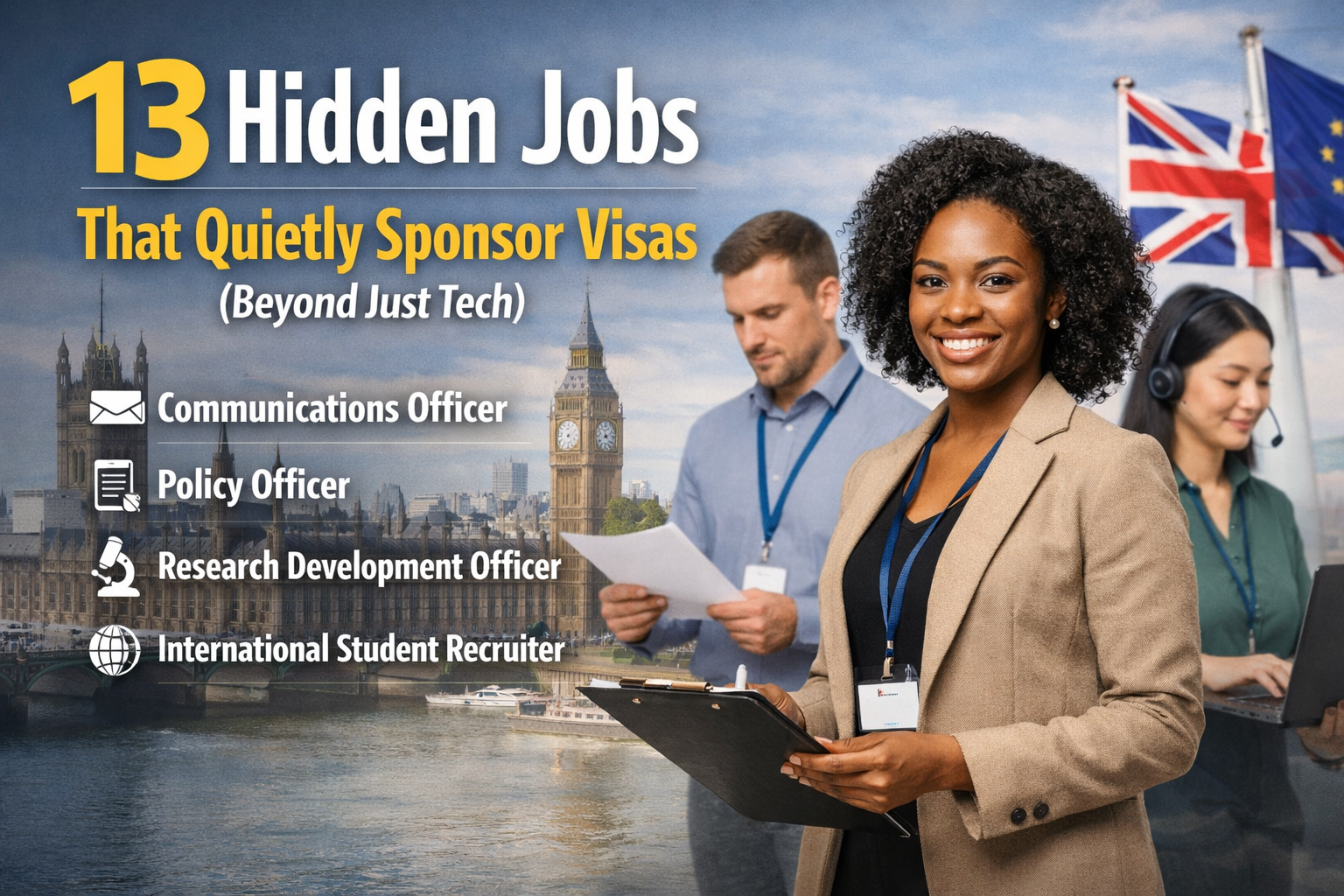
Right now, it feels like the entire internet is screaming one thing at immigrants in the UK: “Learn tech or go home.” Tech is good. No arguments there. But here’s the uncomfortable truth nobody likes to say out loud: not everyone needs to force themselves into tech just to get visa sponsorship. Especially not when: you have limited visa time you’re being sold the idea that a 3-month bootcamp with zero experience will magically land you a sponsored role you already have years of transferable skills that employers actually need. Visa sponsorship in the UK is not only happening in tech.
There are quiet, less-hyped roles sponsoring visas every year, especially in the public sector, education, and nonprofit spaces. And many of you are already closer to these roles than you think.
Let me show you. The Problem With the “Everyone Must Do Tech” Narrative. Here’s what often gets left out of the conversation: Tech is oversaturated at entry level. Sponsorship usually goes to people with proven experience, not beginners. A rushed pivot into tech doesn’t always beat years of experience in another field. UK employers value domain knowledge just as much as technical skills.
If you’ve worked in communications, administration, research, education, policy, project coordination, student support, or nonprofits, you may already be a strong fit for sponsor-friendly roles. You don’t need to reinvent yourself. You need to reposition yourself.
13 Hidden Jobs That Quietly Sponsor Visas in the UK
These are roles many immigrants overlook, but UK employers regularly sponsor for them.
1. Communications Officer
This is what I do myself. I work as a communications officer and have been sponsored for my role twice. I don’t gate keep comms at all. I can tell you life is good working in comms.
What we do: Write newsletters, manage internal and external messaging, coordinate media content, support campaigns.
Who hires: NHS Trusts, UK universities, charities, local councils, Civil Service, and the private sectors.
2. Policy Officer
What they do: Research policy issues, draft reports, support policy development and implementation.
Who hires: Think tanks, regulators, charities, universities.
3. Research Development Officer
What they do: Support academics to apply for grants, develop funding strategies, help with proposals.
Who hires: UK universities, research institutes.
4. Programme Officer
What they do: Coordinate projects and programmes, track delivery, manage reporting.
Who hires: NGOs, charities, foundations, councils.
5. International Student Recruitment Officer
What they do: Recruit international students, manage education agents, attend fairs, build partnerships.
Who hires: UK universities (very sponsor-friendly).
6. Equality, Diversity & Inclusion (EDI) Officer
What they do:
Develop inclusion policies, run training, handle reporting and compliance.
Who hires: NHS Trusts, universities, public bodies.
7. Monitoring & Evaluation (M&E) Officer
What they do:
Track project impact using basic data, reports, and frameworks.
Who hires: NGOs, charities, international development organisations.
8. Quality Assurance Officer (Education or Services)
This is not engineering QA.
What they do: Ensure standards, audits, documentation, compliance.
Who hires: Universities, awarding bodies, training providers.
9. Governance Officer
What they do: Prepare board papers, manage governance processes, ensure compliance.
Who hires: NHS Trusts, housing associations, universities.
10. External Relations Officer
What they do: Manage partnerships, donors, alumni relations, stakeholder engagement.
Who hires: Universities, charities, cultural institutions.
11. Sustainability Officer (Policy or Reporting Focus)
Not engineering-heavy.
What they do: ESG reporting, sustainability planning, policy coordination.
Who hires: Universities, councils, large organisations.
12. Public Affairs Officer
What they do: Engage policymakers, respond to consultations, support advocacy work.
Who hires: Charities, NGOs, think tanks.
13. Research Impact Officer
What they do: Show how research benefits society through case studies and metrics.
Who hires: UK universities.
Bonus Roles Also Sponsoring Quietly
Student Services Officer Careers & Employability Officer Digital Content Officer
All sponsor-friendly, especially within universities and public sector organisations.
Why These Roles Sponsor Visas
Most of these jobs sit in: the public sector education charities and nonprofits
These sectors: already understand sponsorship, have established HR frameworks, struggle to fill roles consistently, value writing, research, coordination, and stakeholder skills
What To Do Next (Very Important)
Don’t just read this and nod.
Do this instead:
Pick 3–5 roles that match your transferable skills. Search them on: LinkedIn Indeed jobs.ac.uk. Check employers against the Skilled Worker sponsor list on gov.uk. Tailor your CV to highlight: project coordination report writing stakeholder engagement communication and research skills. Apply consistently. Don’t wait for “perfect”.